
Why SpaceX’s Biggest Business Is Now Super Intelligence
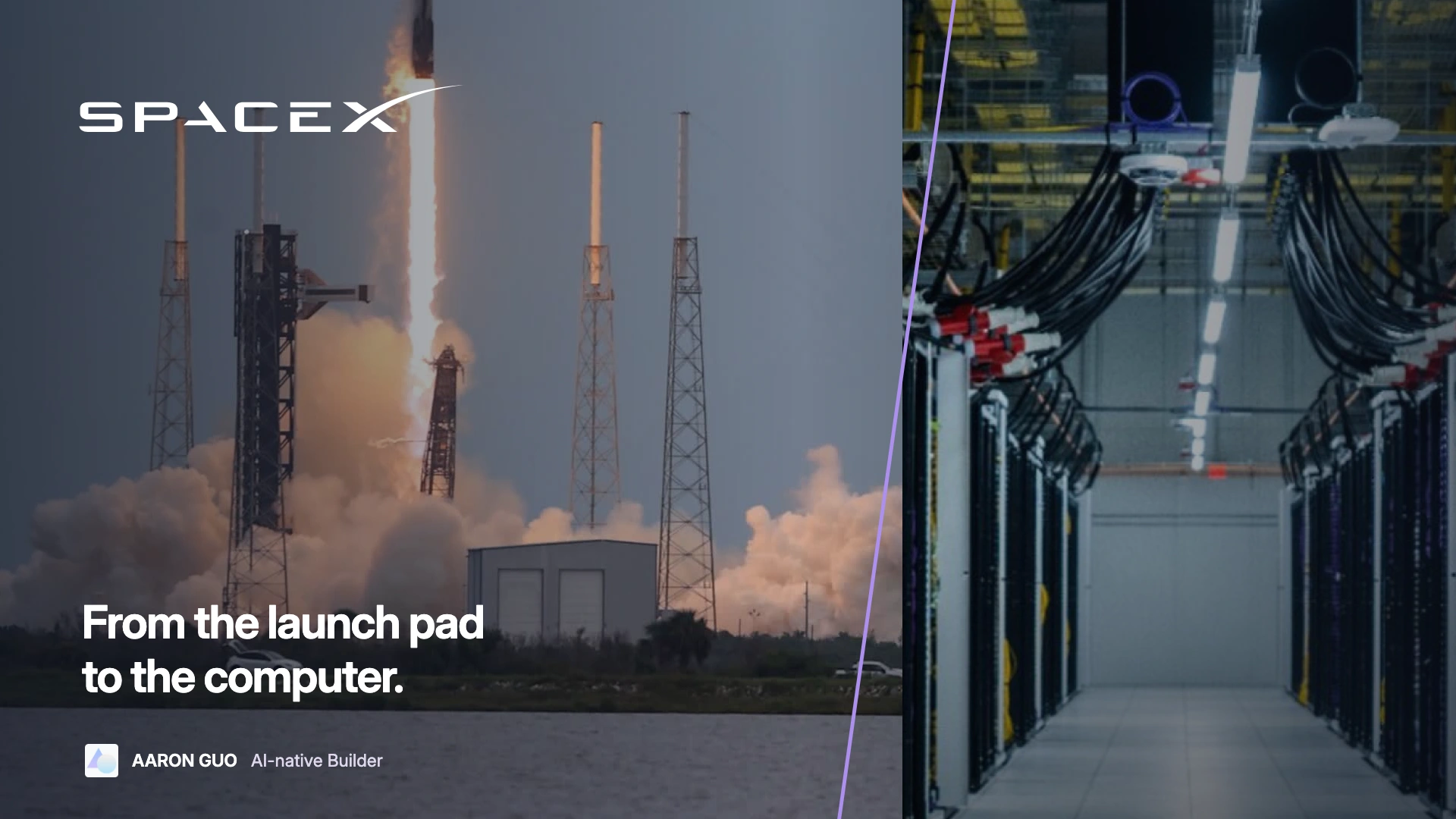
Why is the largest revenue segment at SpaceX now called Super Intelligence?
In the company’s unaudited results for the third quarter of 2026, SI brought in $7.56 billion—just over half the group’s sales. That is an arresting headline for a company most of us still picture as a rocket rising through smoke. It is also a headline that can send us down the wrong path. It does not mean half of SpaceX’s sales came from people paying to talk to Grok.
My reading is that SpaceX has become a broader group whose businesses sell very different things. To understand the change, we need to follow the customer from the launch pad to the internet connection, then behind the software interface to the resources that make it work. An anonymous buyer in a footnote makes that journey more revealing than the segment name alone. Q3 results and filing
▶ Watch the full film on YouTube · 5:58
The rocket is a sale—and a way to build another business
Start with a satellite customer who needs a payload delivered into orbit. The transaction is easy to understand: the customer pays for a launch.
Now move to a Starlink terminal on a house, a boat or a campsite. The person using it wants a working connection. The rocket remains essential to the system, but this person is buying internet access rather than a seat on a spacecraft.
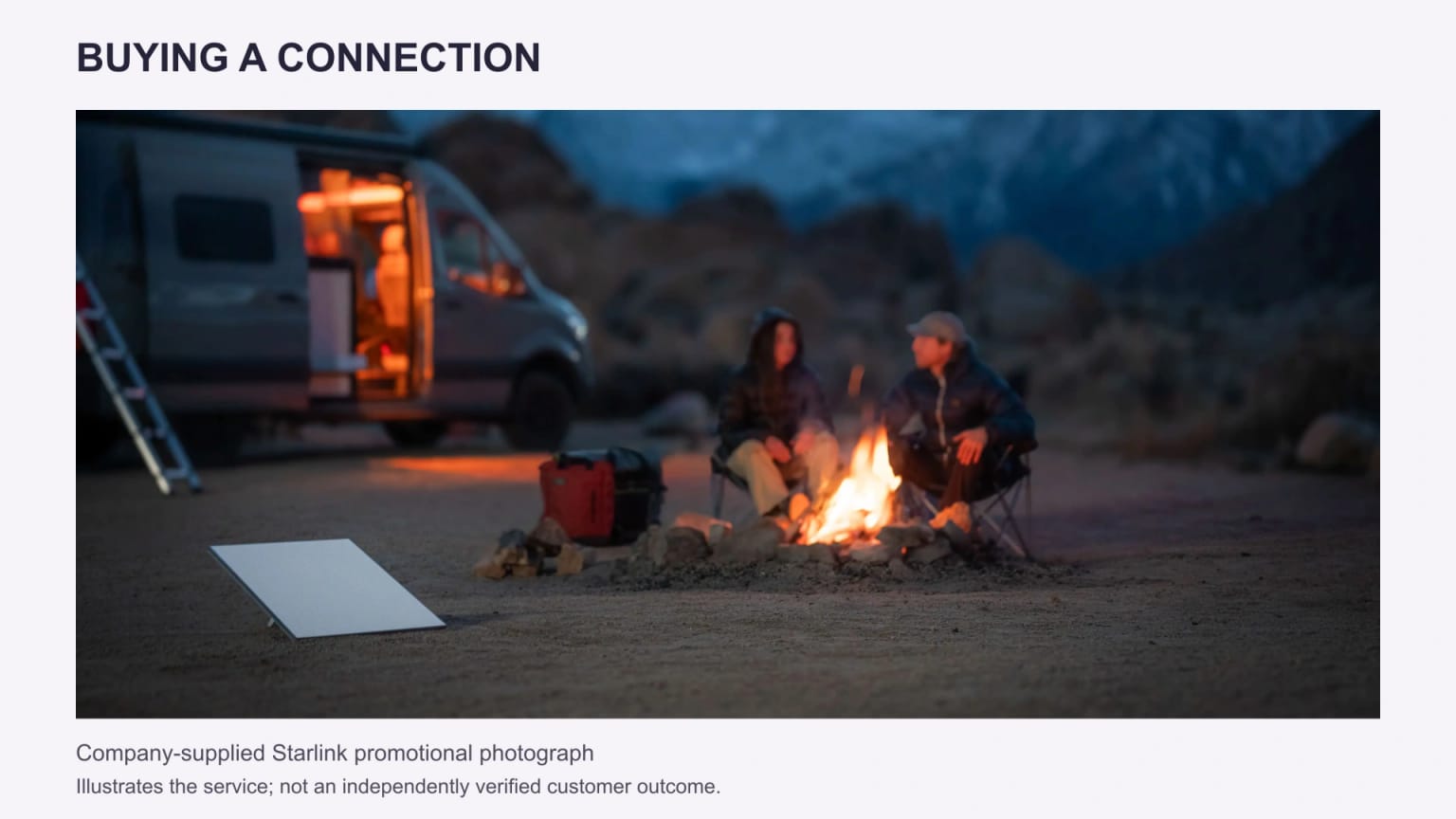
Company-supplied Starlink promotional photograph. It illustrates the service and its use; it is not an independently observed customer outcome.
That difference changes where we look for revenue. A launch can earn money from an outside customer. It can also put part of SpaceX’s own network in orbit, enabling connectivity sales later.
The filing makes the distinction explicit: launches of the company’s own Starlink satellites do not produce intersegment revenue. Their costs are capitalized into the satellites. We should not read a smaller reported Space revenue share as a measurement of how little rockets matter. Some of their contribution sits inside the network they help create. Form 10-Q, segment reporting
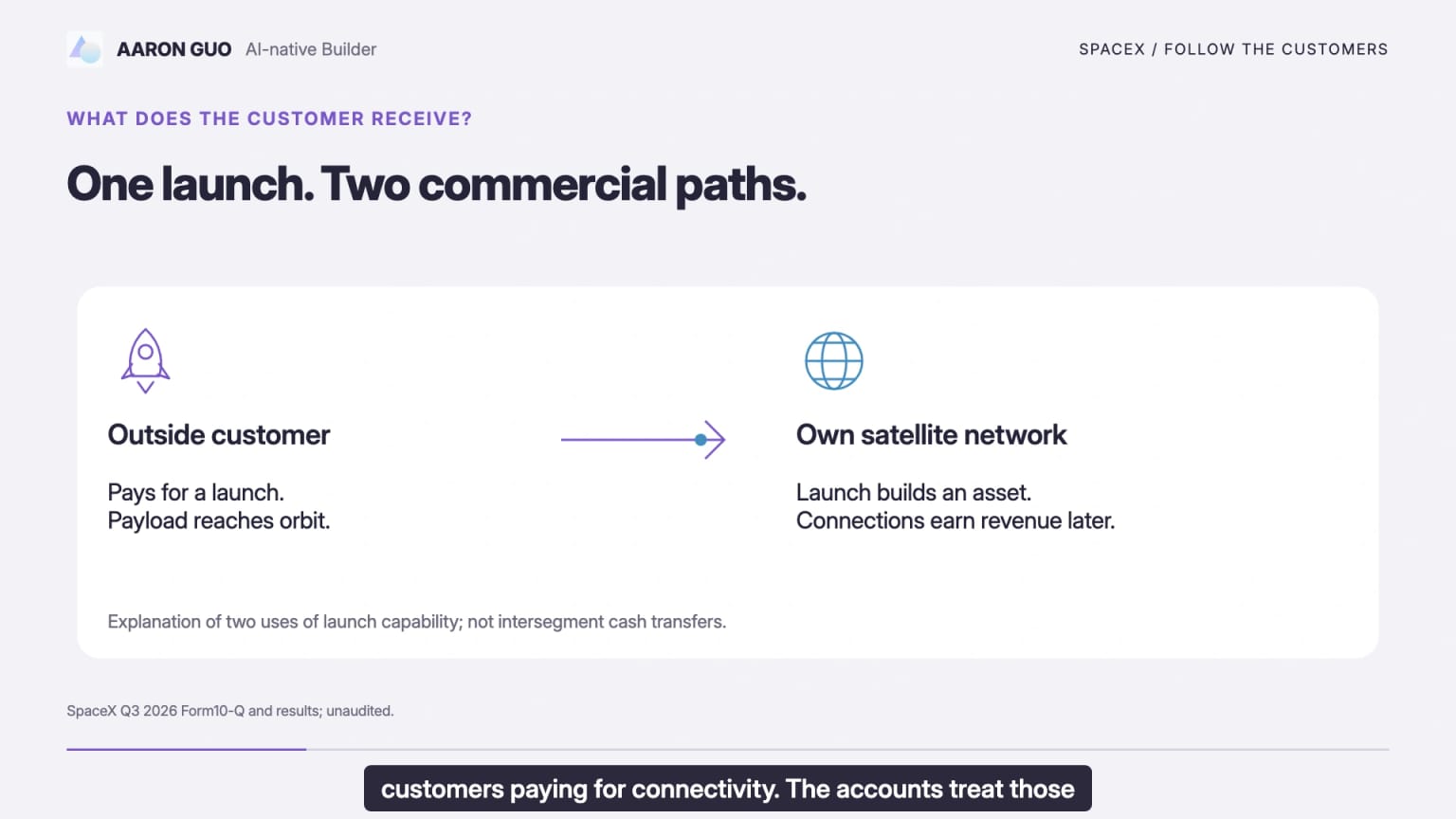
An explanatory diagram, not an actual customer contract or a diagram of cash transfers between segments.
A familiar machine can therefore support two different commercial stories. That is the first reason to follow what customers receive rather than treating every flight as the same kind of sale.
The company’s name stayed; its boundary changed
There is a second reason the old mental picture no longer fits. SpaceX completed its acquisition of xAI in February 2026. X was already inside xAI, and Cursor joined the group in August.
The corporate boundary now includes products with very different uses. Someone asking Grok a question, a developer working in Cursor and a business reaching an audience on X can sit inside the same much broader company picture. This describes the reporting perimeter; it does not prove those businesses are operationally integrated.
The SI segment combines software and digital services with computing infrastructure. Its reported total includes a broad solutions-and-infrastructure basket as well as advertising. The company does not disclose an individual revenue figure for every familiar product. A Grok screen cannot explain the whole SI bar, and Cursor’s acquisition alone cannot explain it either. Form 10-Q, acquisitions and segment disclosures
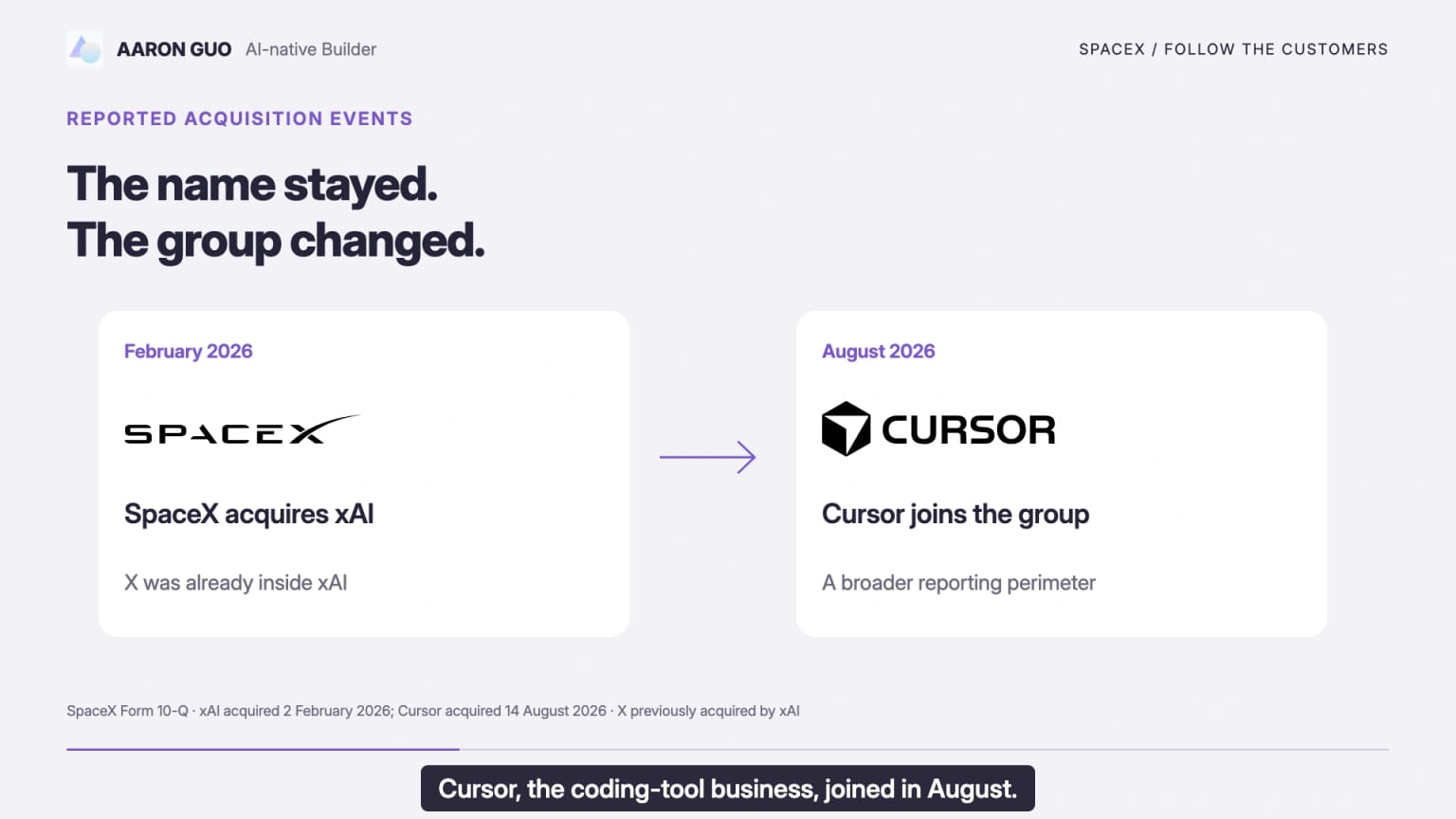
Dates show reported acquisition events. The diagram does not assert technical integration or imply that one product generated the whole segment’s sales.
Acquisitions explain how these businesses came under the same name. To understand the scale of the revenue, we have to ask a more concrete question: what is being purchased?
An app and the capacity behind it are different purchases
Imagine two buyers. This is an illustration, not a claim about a particular disclosed customer.
One buys a finished software service. The other reserves computing resources to do work of its own. Both may be spending on AI, but the promise being sold is different.
SpaceX’s filing describes cloud arrangements under which customers reserve compute capacity and pay fixed monthly fees. The company stands ready to make that capacity available. This is a useful contrast with the image of millions of individuals opening a chat window. Form 10-Q, revenue recognition
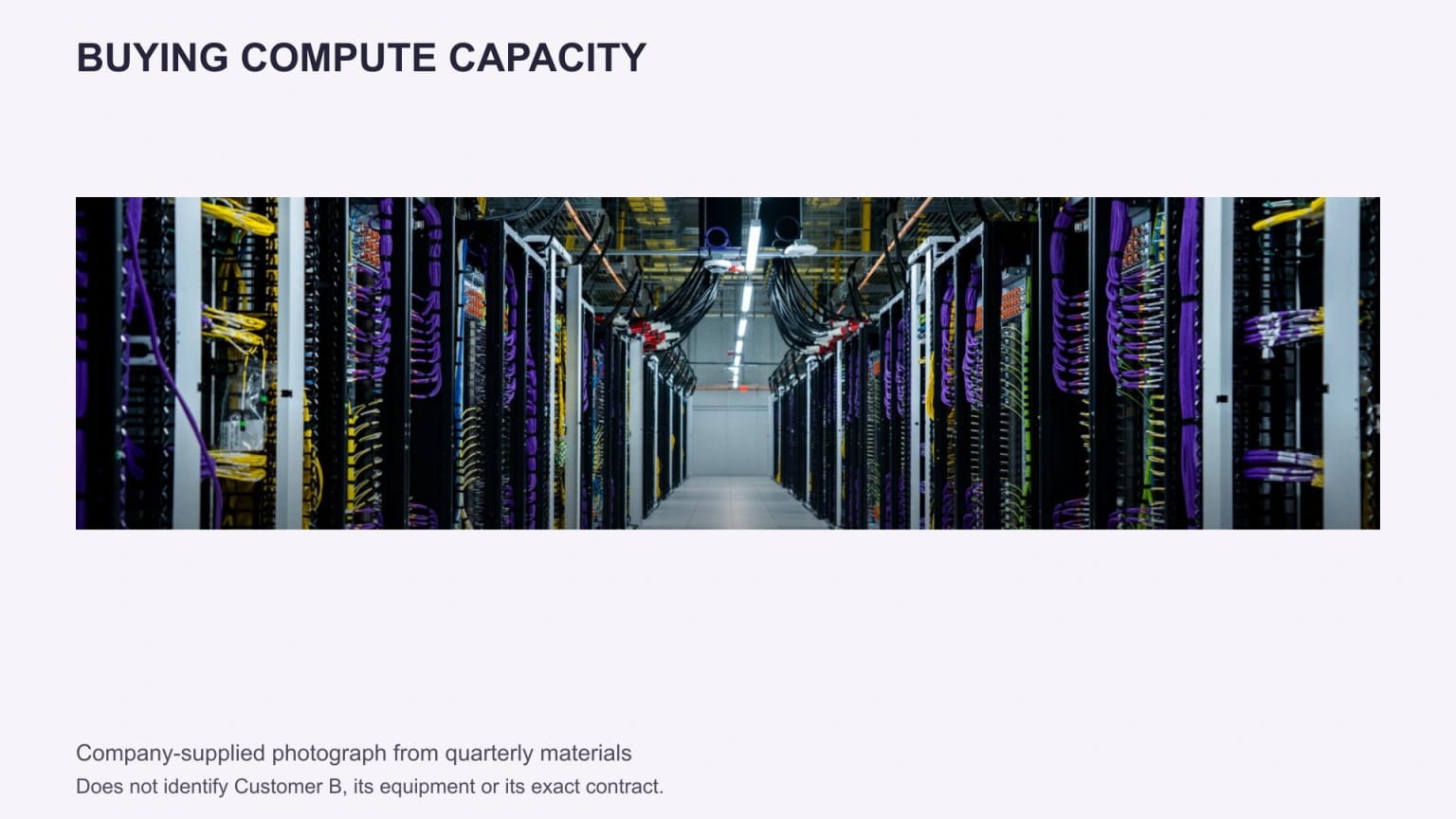
Company-supplied image from the quarterly materials. It gives physical context to computing infrastructure; it does not identify Customer B, its equipment or its exact contract.
Behind the screen are machines, power requirements and capacity commitments. Management attributes much of SI’s recent revenue growth to cloud services operating for a full quarter and to new contracts, alongside other contributions. That is management’s explanation, not an independent test of demand. The reported total still does not give us a clean cloud-versus-Grok-versus-Cursor split. Company results
This is where the story becomes more interesting than “rockets versus AI.” The SI label groups together purchases that can have very different customers and commercial dynamics. How widely are those sales spread?
The buyer in the footnote
The customer-concentration note identifies an unnamed Customer B. In Q3, this buyer accounted for 34.5% of total consolidated revenue, all relating to SI.
That first denominator matters. The filing is not saying 34.5% of SI. Combining the concentration note with the reported segment figures gives us:
$14.575bn × 34.5% ÷ $7.560bn ≈ 66.5%
In other words, this single buyer represents roughly two-thirds of SI revenue for the quarter. The two-thirds figure is our calculation from company disclosures, not an additional percentage printed in the segment table. Form 10-Q, customer concentration and segment revenue
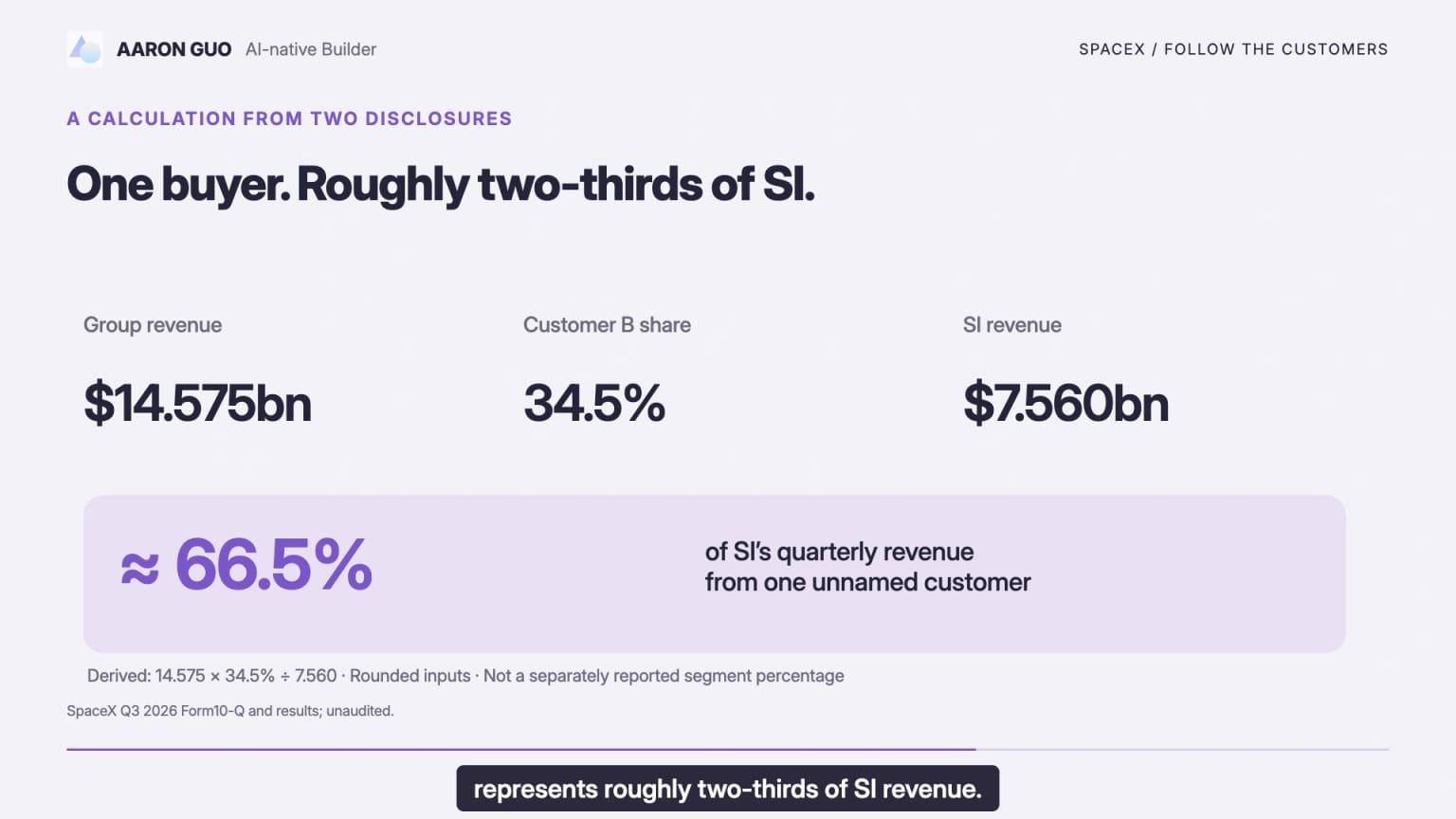
Q3 2026 only; figures are company-reported and unaudited. The derived result is approximate because the reported percentage is rounded.
The filing does not name the buyer or identify its exact purchase. A large cloud operation elsewhere in the accounts does not prove that Customer B bought a particular cloud contract. Filling the empty space with a famous logo would make the picture more vivid and the explanation less trustworthy.
The point is the customer structure. A segment with one buyer contributing roughly two-thirds of quarterly sales is a different commercial picture from millions of small, unrelated subscriptions. A major relationship can support investment and expansion. It also makes that relationship more consequential. This note does not tell us what happens at renewal, how replaceable the demand is or what the future economics will be.
The headline has not changed. Our understanding of what sits behind it has.
Revenue does not answer every question
SI was the largest revenue segment in the latest quarter. Connectivity contributed much more reported operating profit. The comparison includes material costs and acquisition-related accounting items; it is not a clean ranking of the businesses’ underlying quality.
The time period also changes the picture. Across the first nine months of 2026, Connectivity still reported more revenue than SI. The latest quarter is informative. It does not settle the full year, let alone the company’s future. Form 10-Q, segment results
So has SpaceX stopped being a rocket company? I would describe it as a group that has grown through both building and acquisition, and whose businesses use and sell different kinds of capacity. Rockets carry payloads. A satellite network delivers connections. Software and computing infrastructure serve another set of needs.
The rocket is still extraordinary. It just cannot explain everything now contained within the company’s name.
Next time a spectacular launch dominates the screen, ask three questions about the business behind it: what does the customer receive, where is that activity reported, and how dependent are the sales on a few buyers? Those questions connect the rocket, the terminal and the computer without pretending they are the same transaction.
Enjoy the launch. To understand the company, follow the customers.
Original diagrams are explanatory. Company photographs are attributed editorial excerpts used to discuss the reported businesses and offerings; they do not establish independent customer outcomes or identify Customer B. The cover combines a NASA/Cory S Huston Crew-13 launch frame (1 October 2026) and a company-supplied computing-facility photograph with native layout and labels. The launch follows the financial quarter and does not depict Starlink deployment or establish Q3 revenue.