
What I Learned from The Almanack of Naval Ravikant - Specific Knowledge, Responsibility, and Assets
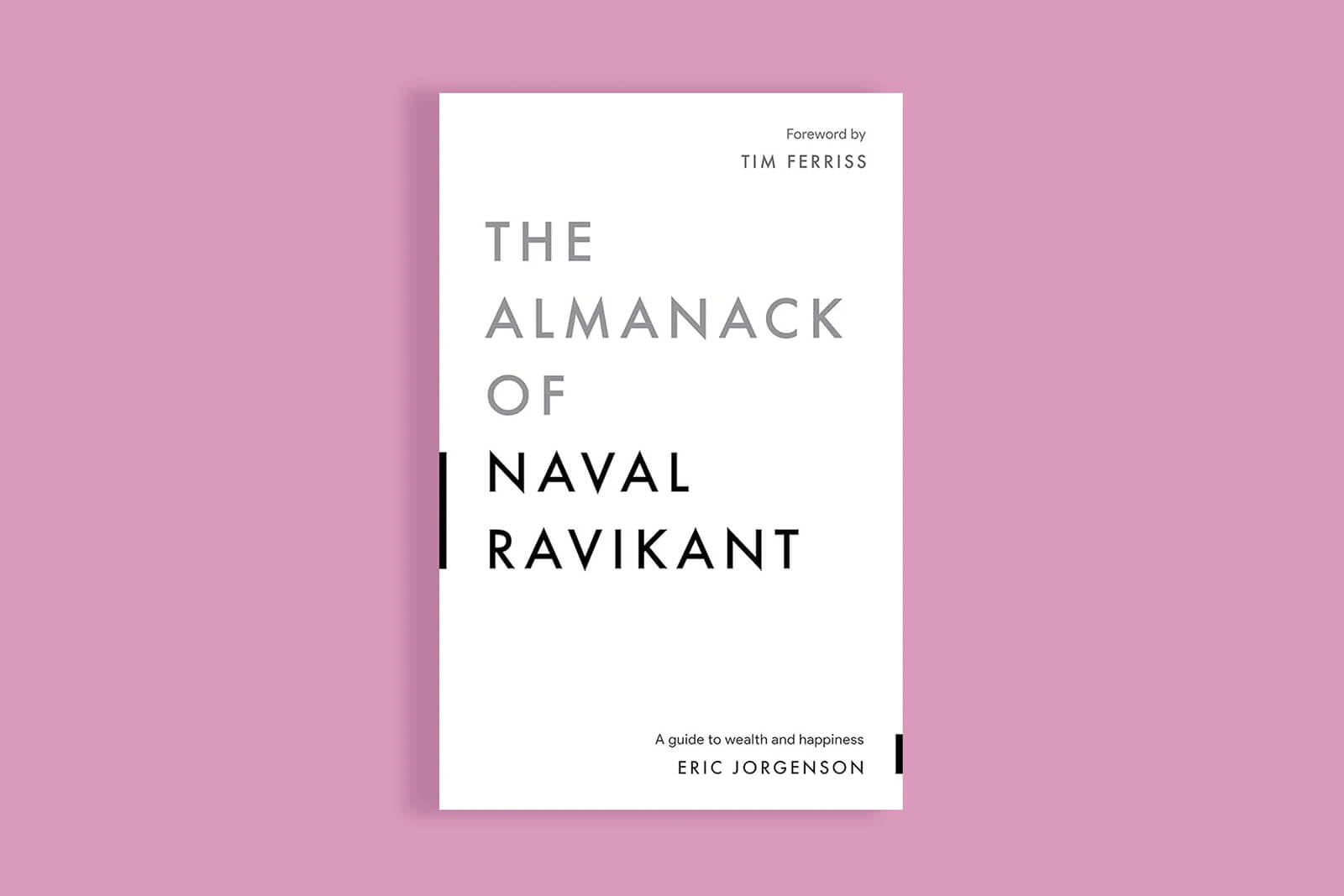
I've been thinking a lot about leverage lately—not the "work smarter" kind, but the structural kind. The kind that lets you create disproportionate value without burning out. That's what led me back to The Almanack of Naval Ravikant.
I finally finished it, and I get why it shows up on so many "re-read every year" lists. The book isn't a typical business playbook. It's closer to a set of mental models about how to live well—and how to build wealth without selling your soul (or your entire calendar).
Plenty of ideas in the book are memorable: leverage, judgment, compounding, peace, reading, long-term games. But if I compress my personal takeaway into one sentence, it's this:
Build my specific knowledge, take more responsibility, and build assets.
That trio feels like a practical roadmap—not motivational, not vague—just a clean loop I can execute on for years.
Why this triad matters to me
In the past, I've often approached growth like a checklist: learn a new framework, ship another project, read another book, do another "productive" thing. It works… until it doesn't. You end up with motion but not momentum.
This book pushed me to look at the deeper structure underneath momentum:
- Specific knowledge gives you an edge that isn't easily copied.
- Responsibility gives you the right to make decisions and capture upside.
- Assets give you leverage that can compound while you sleep.
It's not three separate tips. It's one system.
You can have skills but no autonomy. You can have autonomy but nothing scalable. You can build things but never develop taste and judgment. This triad closes the loop.
1) Build specific knowledge: the kind that can't be cloned
The phrase "specific knowledge" sounds like a productivity buzzword until you really sit with it.
Specific knowledge is not what most of us call "being smart." It's not credentials. It's not being good at interviews. It's not even being "a strong engineer" in a generic sense.
Specific knowledge is the combination of:
- real expertise built through obsession,
- lived experience,
- taste and judgment,
- and a set of skills that stack uniquely in one person.
It's the knowledge that makes people say: "I don't know how you do that, but you make it look obvious."
The uncomfortable truth: it can't be fast-tracked
This is the part I needed to hear: specific knowledge is earned, not obtained.
You don't download it as a course. You don't "catch up" in a weekend. You build it through repetition and curiosity over years—often by following what genuinely interests you.
That has a strategic implication: I should stop optimizing for what's popular and start optimizing for what I can compound.
What "specific knowledge" looks like in practice
For me, specific knowledge isn't "coding." It's not "product management." It's not "design."
It's the intersection of multiple skills:
- Technical execution - I can build end-to-end, not just spec
- Product taste - I know what "good" looks like before building it
- Simplification - I can make complex things feel obvious
- Execution leadership - I can ship, not just propose
That combination is harder to replace than any single skill. And it gets more valuable over time if I keep stacking it.
The standard I'm aiming for
A useful test I'm adopting:
If I disappeared for a month, would my team still ship? If I disappeared for a year, would my product still evolve? If I disappeared forever, would there be something that continues to create value?
Specific knowledge helps me contribute today. But it also helps me design things that survive me.
2) Take more responsibility: earn the right to outcomes
This might be the most "simple but not easy" lesson.
Taking responsibility doesn't mean "work harder." It means:
- owning outcomes instead of tasks,
- being the person who will figure it out,
- and accepting that if it fails, it's on you.
That's scary. It also changes everything.
Because responsibility is what creates trust. Trust creates autonomy. Autonomy creates decision-making rights. And decision-making rights are where leverage begins.
Responsibility is how you get leverage without asking for permission
A lot of people want more freedom but avoid responsibility. They want upside but don't want blame. They want influence but don't want accountability.
But responsibility is the trade. You don't get the benefits without paying that cost.
When I look back at every meaningful jump I've made in my career, it wasn't because I performed well at my current scope. It's because I expanded the scope, then grew into it.
The responsibility ladder I'm trying to climb
I'm trying to be intentional about moving up this ladder:
- Do tasks well
- Own a project end-to-end
- Own a system (and its reliability over time)
- Own an outcome (business metrics, customer value, strategy execution)
- Own a portfolio of bets (where judgment matters most)
At the top, performance matters less than judgment. You're paid for being right, not busy.
A personal rule
I'm adopting a rule that feels very "Naval":
Don't just ship work. Ship responsibility.
If I'm going to spend energy, I want it to increase my surface area of ownership, not just fill my day.
3) Build assets: create things that compound without you
This is the most practical takeaway, because it transforms how I view "work."
If I trade time for money, I reset to zero every morning. If I build assets, I create compounding.
An asset is something that can produce value repeatedly without requiring the same unit of effort each time.
That can be:
- equity in a business,
- code that runs and serves users,
- content that attracts an audience,
- a dataset,
- a distribution channel,
- a brand,
- a reusable system or platform,
- even relationships that create long-term opportunities.
The key is not what kind of asset. The key is: does it keep working after I stop?
The shift: from "projects" to "factories"
I'm trying to shift my mindset from building one-off projects to building small factories.
A factory can produce outcomes repeatedly:
- a personal website that consistently attracts opportunities,
- a product that solves a recurring pain,
- a library or tool that accelerates future work,
- a content engine that makes ideas discoverable.
A project ends. A factory compounds.
For me, that means:
- This blog - content that attracts opportunities and builds reputation
- Drum Next - a product that serves users while I sleep
- Reusable code patterns - systems that accelerate future projects
- Distribution channels - RSS, social, networks that amplify reach
Assets require leverage
And this is where the triad connects:
- Specific knowledge helps you build something differentiated.
- Responsibility helps you make decisions and move fast.
- Assets help you scale output beyond your hours.
It's one flywheel.
How I'm turning this into action
Reading is easy. Integrating is hard. So I wrote down a simple operating plan I can actually follow.
Step 1: Pick one "specific knowledge lane" to deepen this year
Instead of scattering, I'm choosing a lane that I can compound:
A lane should be:
- interesting enough that I'll stick with it,
- valuable enough that the market rewards it,
- and rare enough that it's not instantly commoditized.
Then I ask: what does "10,000 reps" look like here?
Step 2: Increase responsibility intentionally (without burning out)
This isn't about saying yes to everything. It's about saying yes to the right things.
I'm looking for responsibilities that:
- increase my decision-making rights,
- teach me judgment,
- and connect directly to outcomes.
If something only increases my busyness, I want to decline it—no matter how "productive" it looks.
Step 3: Convert effort into assets every week
I'm adopting a weekly question:
What asset did I build this week?
Not "what did I do." Not "what meetings did I attend." What did I build that will keep paying me back?
Sometimes that asset will be external (content, product). Sometimes internal (systems, templates, reusable components). But the goal is to keep converting effort into compounding value.
The deeper lesson: long-term games with long-term people
Underneath everything, I think the book is pointing to a life strategy:
Choose long-term games. Play with people you trust. Keep your mind clear. Build leverage ethically. Let compounding do the heavy lifting.
The "wealth" part is just one output. The bigger win is that this framework also produces a calmer life:
- When you build specific knowledge, you stop chasing trends.
- When you take responsibility, you stop waiting for permission.
- When you build assets, you stop feeling like time is always running out.
You become harder to replace—and less anxious about being replaced.
Closing
If I had to summarize what I'm carrying forward from The Almanack of Naval Ravikant, it's not a quote. It's a direction:
I want to become the kind of person who can:
- develop rare, real skill,
- shoulder real responsibility,
- and build assets that compound.
Not as a hustle story. As a life design.
And now the real work begins: doing it consistently, quietly, for a long time.