
Gemini 4 Argon Is Announced. Can You Actually Use It?
Gemini 4 Argon has a launch page. Finding a place to use it is a different task. Google announced the model on September 30, but describes a phased rollout, initially to trusted cyber defenders. Broader access is still presented as forthcoming. Google's announcement
For a builder deciding what to try this week, that distinction comes before the benchmark chart. A model may be worth following while still being unavailable for the job you want to give it. The useful question is: which part of the launch can you act on today?
This is a public-source access check, dated October 2, 2026. It includes no Argon run, subscription upgrade or private account test. The purpose is to give you a short route from an exciting announcement to an informed decision about your next experiment.
Follow the launch to the place where work begins
There are two official pages to open side by side: the announcement and the Gemini API model catalog. The first describes the new model. The second lists models and endpoint names for the public API.
On today's check, the catalog did not list Argon. Its page showed an October 1 update date. We read the full catalog and captured the browser view below; the screenshot gives context, while the full-page check supports the observation.
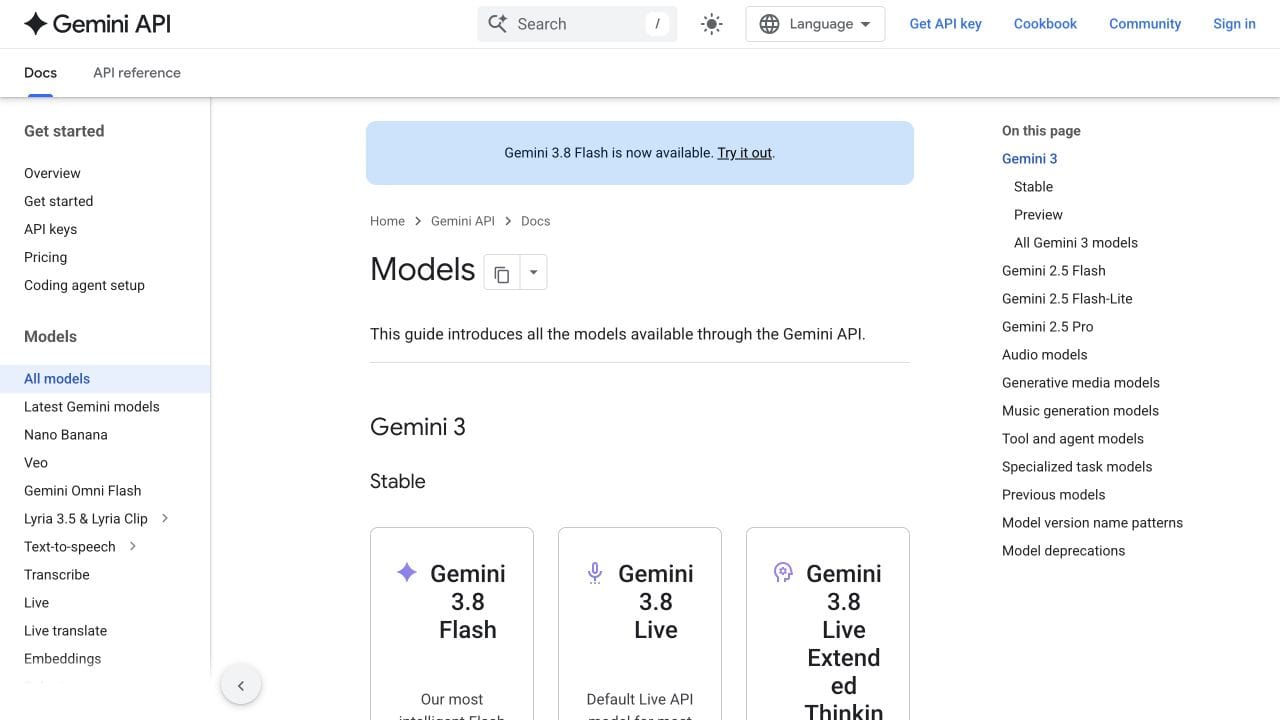
Actual public-page capture, October 2, 2026. This observation concerns this catalog at this time; it does not rule out private access or every other Google product.
The announcement says the broader rollout will begin with paid API customers and Google AI Ultra subscribers. It gives no calendar date for that step. This is an announced order of access, rather than evidence that buying a plan today will unlock Argon. Rollout details
Public discussion already includes people asking when Pro users will get Argon. Those questions explain why an access guide is useful. Replies and predictions in that thread cannot establish Google's rollout schedule.
Catalog documentation: Google AI for Developers, used under CC BY 4.0.
Match the evidence to the route you will use
Someone using the Gemini app needs to check the model selector and the access information for that account. Someone building through an API needs a documented model identifier for that route. A developer guide can help with the API question; it cannot certify what appears in a particular person's app.
If you already have API access, Google's model reference documents a listing operation. Use it to inspect the model names and supported methods returned through your own access. Listing a model is still a narrower result than completing a job with it. Preserve the returned identifier and check what operations it supports before planning a test.
There is no reason to invent an endpoint name from the marketing name. A plausible-looking string can waste an afternoon of debugging something that has not opened to your account. Likewise, a model's answer about its own release date is not a substitute for current product controls or official access documentation.
For a first check, keep this small:
| What you found | What it establishes | Next useful step |
|---|---|---|
| Official launch page | What the company announced | Read its access section |
| Documented API identifier or app selection | A specific route to investigate | Confirm it appears through your access |
| A completed, saved result from that route | What happened on your task | Review the result and recorded model identity |
The last row is where a hands-on article can begin. This article stops before it.
Why the larger output is worth watching
Google also announced a one-million-token output ceiling, increased from 64,000. That is generation capacity, rather than the amount of material supplied to the model. The output announcement
What interests me is the possibility of a more complete handoff. A substantial implementation might return its files, tests and explanation together. An extended analysis might stay with a difficult question long enough to resolve an objection instead of leaving it for another conversation. Those are reasons to prepare a task; the ceiling does not tell us whether Argon will deliver them well.
A useful future experiment would start with something you already need: for example, turn a small public dataset into a working explorer, with a clear question and an inspectable output. Keep the same dataset and finish condition when comparing runs. Save the actual files, failures and time spent fixing them. That would tell a reader more than a long answer or an attractive demonstration made with another model. We have not performed that Argon experiment.
Keep the next step small enough to be real
Today's public check leaves Argon on the watch list. The announcement is worth reading; the catalog check does not yet give us a public Argon endpoint to use. If your account has a different access route, confirm that route directly and record its scope.
I would keep current work moving with a model already available, and save one worthwhile task for Argon's arrival. Once access opens, the question can change from “where is it?” to “what did it finish?” That is the moment to spend time on a proper test—and to show the result rather than another announcement.