
Fable 5 Changed the Unit of AI Work

I gave Claude Fable 5 a multi-hour task, and for the first time the interaction did not feel like prompting a model.
It felt like launching a work run.
The difference is subtle until you experience it. In the normal chat loop, I am inside the work. I ask a question, inspect the answer, correct it, add more context, ask again, and keep steering every few minutes. With Fable, the shape changed. I gave it an objective, it planned, delegated, researched, synthesized, and came back with polished pages. The visible result was the page. The more important result was the run itself.
That is the part I think matters.
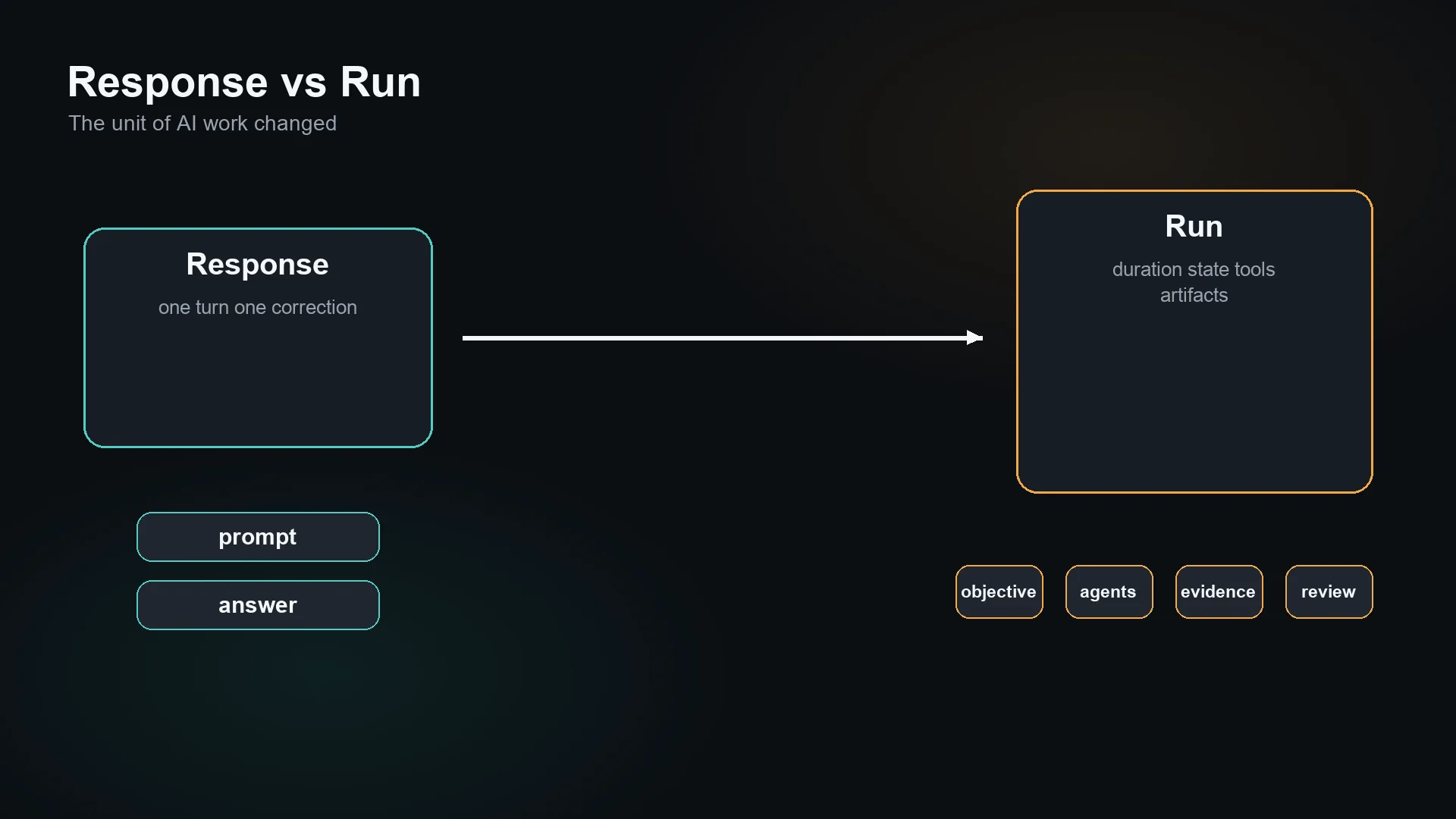
Fable 5 did not only produce better output. It changed the unit of AI work from a response to a run.
Anthropic launched Fable 5 and Mythos 5 on June 9, 2026, describing models that can work autonomously for longer than previous Claude models. Three days later, Anthropic said it had received a US government export-control directive to suspend Fable 5 and Mythos 5 access for foreign nationals, with the practical effect of disabling access for all customers while it works to restore availability.
The launch and suspension made the same point from different directions. The launch showed what happens when agents can run longer, delegate more reliably, and use tools across larger tasks. The suspension showed that once agents become capable enough, control, governance, and boundaries stop being secondary concerns.
The lesson is not simply that Fable was powerful. The lesson is that when an agent can run for hours, the scarce skill is no longer writing the cleverest prompt. It is designing the operating contract that makes the run bounded, inspectable, and reversible.
The unit changed from response to run
A response is small. It has text, maybe a tool call, maybe a file edit. If it is wrong, I correct it. If it is incomplete, I ask again. The cost of a mistake is usually one turn.
A run is different. A run has duration. It has state. It consumes tokens, calls tools, reads files, writes artifacts, dispatches subagents, makes intermediate assumptions, and may travel a long way before I inspect the result. The cost of a bad assumption is no longer one bad answer. It can become an entire wrong branch of work.
That is why longer autonomy changes the economics of attention. In prompt mode, my attention is the control loop. In run mode, my attention moves before and after the run. Before the run, I define the objective, context, constraints, permissions, checkpoints, and stop conditions. After the run, I inspect evidence and decide whether the work is usable.
The model may be smarter, but the work system becomes less forgiving. If the objective is vague, autonomy amplifies vagueness. If the constraints are unclear, autonomy explores the wrong space. If the agent can take actions without a boundary, autonomy turns capability into operational risk.
This is why "managing agents" is too soft a phrase. The work is not just managing. It is run design.
Fable made the control surface visible
Anthropic's own Fable prompting documentation is revealing because it is not only about better prompts. It talks about long runs, effort levels, progress claims, explicit boundaries, parallel subagents, memory systems, and scaffolding changes. That is a different category of guidance.
If a model can run for hours, the interface cannot just be a text box. The interface needs timeout behavior, progress indicators, asynchronous check-ins, evidence-backed status reports, and a way to define when the model should pause. If it can dispatch subagents, the harness needs to decide when delegation is useful, how subagents communicate, and how their work is reviewed. If it can maintain memory, the system needs a place to record lessons without polluting the work with bad assumptions.
In other words, the model improvement forces a product and workflow redesign around it.
This is the pattern I felt in the Fable run. I was not just looking at "what did the model answer?" I was implicitly asking a different set of questions: What did it decide to research? What did it delegate? Which assumptions did it carry forward? Where did it spend effort? What evidence supports the result? Where would I intervene if the run went off track?
Those questions are not prompt questions. They are operating-system questions.
Superpowers is a practical rehearsal
This is why my experience with Fable connected immediately to Superpowers.
Superpowers is not another model. It is an open-source skills framework and software development methodology for coding agents. Its value is not that it makes the model magically smarter. Its value is that it wraps the model in a more disciplined way of working.
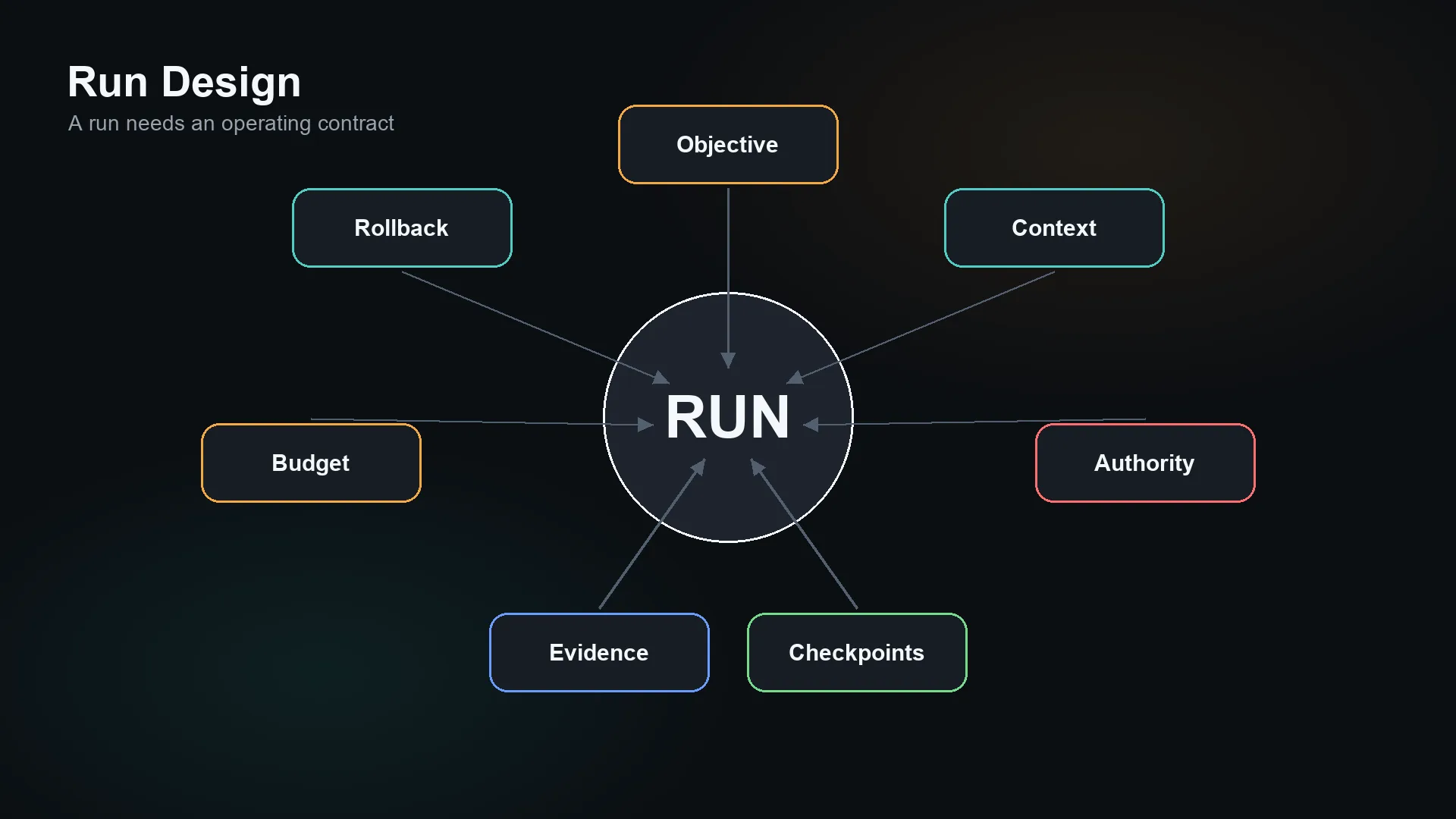
The pattern is simple: clarify the goal, tease out a spec, turn the spec into an implementation plan, execute through subagents or structured phases, review the work, and verify before claiming completion. The skills become a reusable operating contract for the agent.
That changes my daily work with Opus 4.8 and Codex 5.5. I can give the agent a meaningful objective and let it work for one or two hours, because the work is not just free-form generation. It has a process. It reads the codebase, writes a plan, executes against that plan, checks its own work, and comes back with artifacts I can review.
The model is the engine. The skills are the operating discipline around the engine.
This is a useful distinction because it prevents the wrong conclusion. The conclusion is not "Fable is the future, so wait for better models." The conclusion is that better models make the surrounding work system more important. Superpowers is valuable because it trains the habit before every model can run for half a day. It makes autonomy legible.
That is also why the word "skill" is more important than it looks. A good skill is not a prompt template. It is a reusable piece of operating judgment: when to clarify, how to plan, what verification means, when to use subagents, when to ask for review, and what evidence is required before saying the work is done.
This is not just project management
The obvious objection is that all of this sounds like project management with AI branding.
Partly, yes. That is the point. As AI agents become more capable, the work starts to look less like chatting and more like delegation. Delegation has always required goals, context, review, and accountability.
But agent delegation has three differences that make the old habits insufficient.
First, agents move at machine speed. A human teammate who misunderstands a task usually creates friction quickly: a question, a delay, a visible mismatch. An agent can silently spend a large amount of compute on the wrong interpretation and return a polished artifact that hides the wrong path.
Second, agents operate through tools. They do not only think; they read, write, call APIs, modify files, send messages, and eventually may spend money or publish work. That moves risk from "bad answer" to "bad action."
Third, agents are probabilistic workers without native accountability. A human can own a decision socially and organizationally. An agent can produce work, but the accountability remains with the person or team that designed the run.
That is why this is not just normal management. It is management with a new kind of worker: fast, tireless, useful, inconsistent, tool-using, and not actually responsible.
The operating contract is what makes that worker productive.
Governance is the same problem at larger scale
The Fable suspension made this visible at the geopolitical level, but the pattern is the same at every scale.
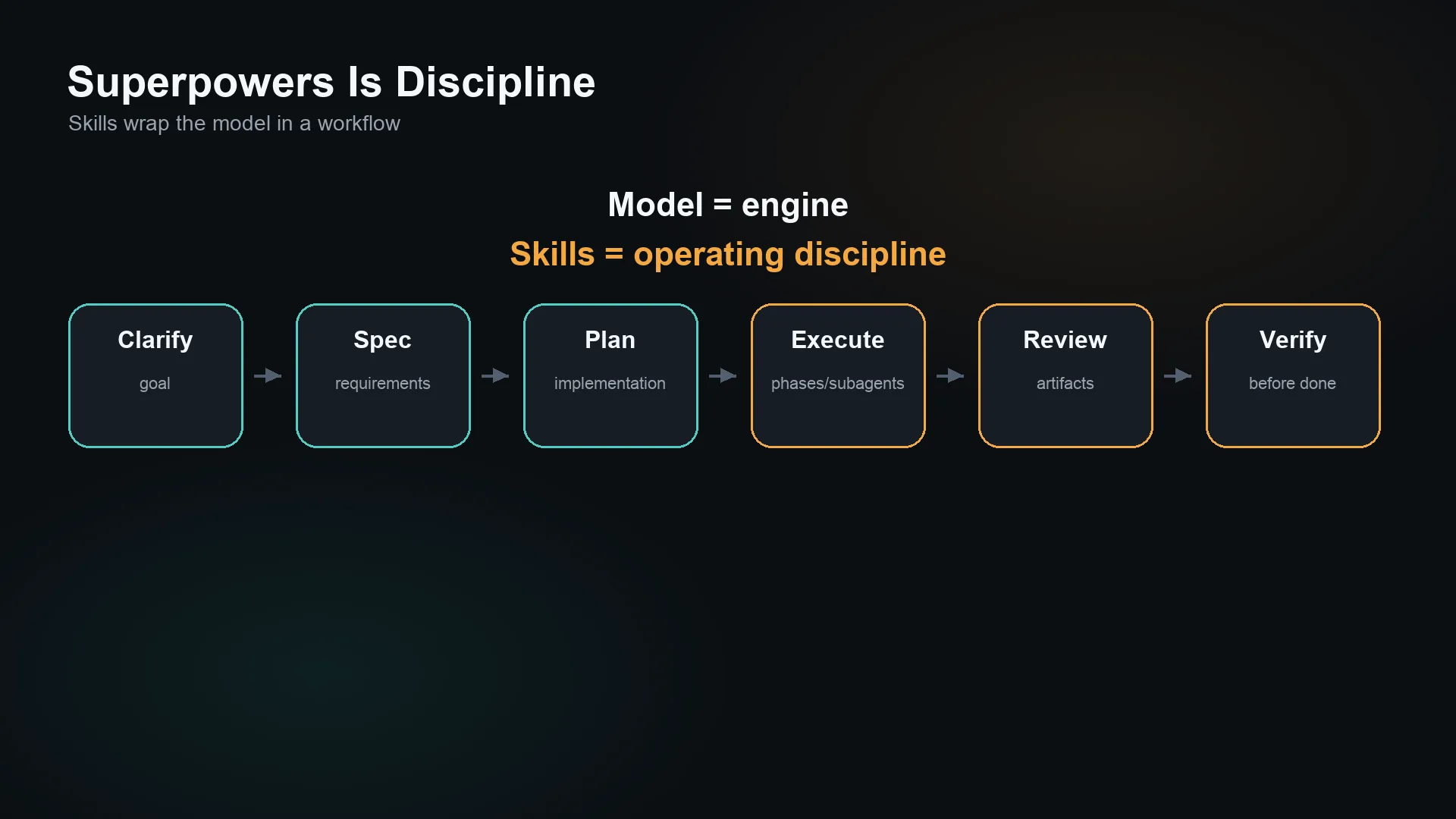
Anthropic's statement talks about safeguards, red-teaming, jailbreak resistance, monitoring, customer data retention, and defense in depth. Databricks framed Fable 5 access around governance, audit logs, tool-call policies, and cost controls. Gartner warned in May 2026 that applying uniform governance to all AI agents can fail because organizations must distinguish an agent's autonomy level from the scope of access it has been granted.
That distinction is exactly right. The dangerous combination is not intelligence by itself. It is autonomy plus access without a proportional control system.
An agent that only observes has one risk profile. An agent that drafts recommendations has another. An agent that can act with approval has another. An agent that can act autonomously across systems is a different category entirely.
This maps directly to individual builders. Before I let an agent run, I need to know what kind of autonomy I am granting:
- Can it only read, summarize, and propose?
- Can it edit files?
- Can it install dependencies?
- Can it call external services?
- Can it create branches, push code, or publish content?
- Can it continue when uncertain, or should it stop at specific boundaries?
These questions are not bureaucratic. They are the control surface of the work.
For every meaningful agent run, I now think there are three practical questions:
- What can it do?
- How will I know what it did?
- How do I stop, reverse, or repair it if it goes wrong?
If I cannot answer those, I have not designed the run. I have only launched it.
The real skill is designing operating contracts
This is where I think AI-native work is going.
Prompting still matters. A prompt is an interface to judgment. But a prompt is not enough when the unit of work becomes a run. A run needs an operating contract.
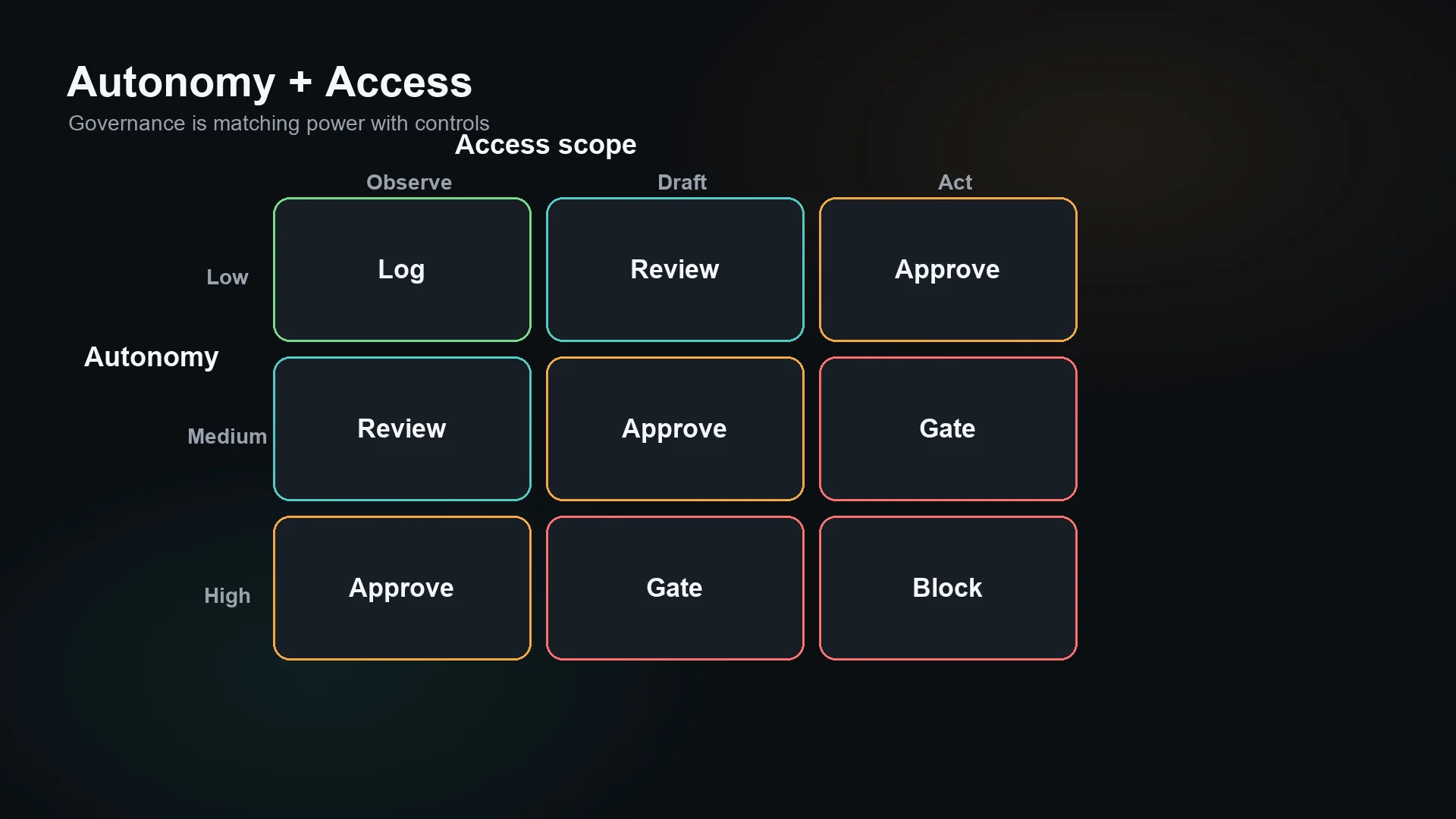
The contract does not need to be complicated. For my own work, I think about seven parts:
Objective: What outcome matters? What would count as success?
Context: Which files, facts, docs, rules, or examples are authoritative?
Authority: What can the agent read, write, call, spend, or publish?
Checkpoints: Where should it pause, report, or ask for approval?
Evidence: What proof must support progress claims and final claims?
Budget: How much time, cost, and exploration is allowed?
Rollback: What happens if the run produces the wrong result?
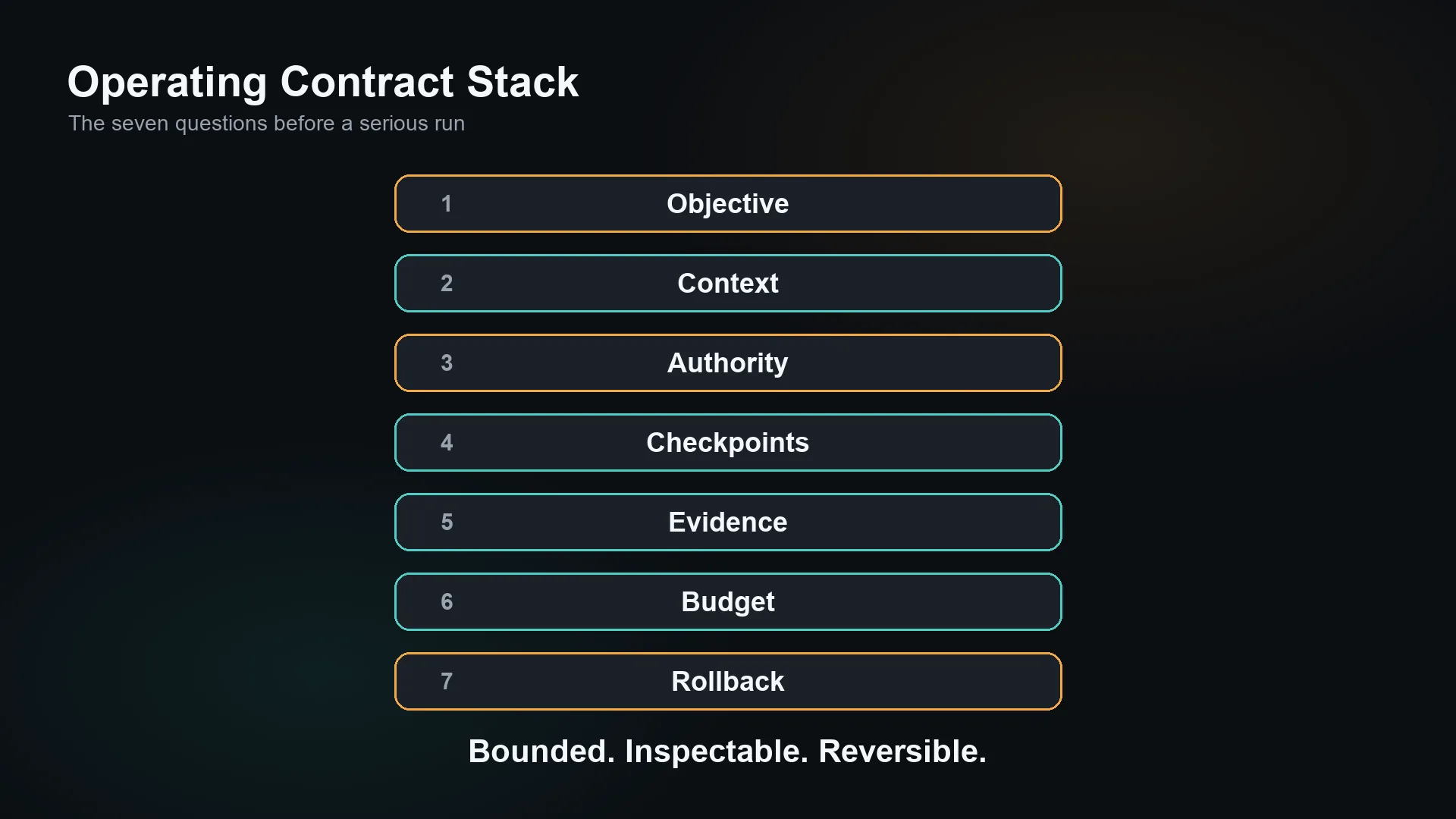
This is a more useful frame than "prompt engineering." It is closer to designing a small factory line. Some work can be handed over and run in the background. Some work requires my direct judgment. The leverage comes from knowing the difference.
That has been the larger shift in my own work. AI makes me feel more powerful because more projects can move at the same time. I can have one agent drafting, another researching, another coding, another turning a plan into distribution assets. But my focus did not become infinite. If anything, the value of focus increased.
The bottleneck moved from doing every task to routing the work correctly.
The best operator in this environment is not the person who watches every step. It is the person who designs the work so that the right parts can move without them, and the important parts still come back for judgment.
The durable lesson
Fable 5 may come back. It may change. Another model may take its place. That product cycle is not the durable lesson.
The durable lesson is that AI work is moving from prompt-response loops to longer, delegated, inspectable runs. Once that happens, the edge moves from access to orchestration.
The strongest model will still matter. But the strongest model inside a weak operating system will produce expensive chaos. A slightly weaker model inside a disciplined workflow may produce shippable work.
That is the part I want to keep practicing: not just how to ask for output, but how to design the conditions under which an agent can do real work.
The future does not belong to the best prompter. It belongs to the builder who can let execution run ahead without letting judgment fall behind.